Poker is a card game where you try to have the best hand, or convince everyone else that you do! You get two secret cards just for you, and five cards are shared by everyone at the table. You bet chips each round, and whoever has the best cards at the end (or scares everyone else into giving up) wins all the chips in the middle! This guide has everything. From basic poker terms for beginners all the way to advanced poker slang and poker phrases used by the pros.
Core Basics
These are the most essential poker terms for beginners. Learn these first before anything else.
Poker – A fun card game where everyone tries to have the best set of cards, or tricks the other players into thinking they do!
Hand – The cards you’re holding right now. Also means one full round of the game from start to finish.
Hole Cards – Your two secret cards that only YOU get to see. Nobody else at the table can look at them. Keep them secret like a treasure!
Community Cards – Cards that everyone at the table shares. They’re placed face-up in the middle and everyone can use them to build their best hand.
Board – Just another word for all the shared cards lying face-up in the middle of the table.
Pot – The pile of chips sitting in the middle of the table. Whoever wins the round gets to take it all home!
Ante – A tiny amount of chips that every player has to throw in before the game even starts, just to get things rolling.
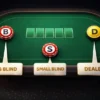
Blinds – Two players have to put in chips before seeing any cards. It’s like paying a small entry fee just to play that round.
Small Blind (SB) – The smaller of the two forced bets. The player sitting just to the left of the dealer has to pay this.
Big Blind (BB) – The bigger forced bet, usually double the small blind. The player two seats left of the dealer pays this one.
Dealer Button – A little disc that moves around the table each round to show who the ‘dealer’ is. It decides who bets first and last.
Buy-in – The amount of chips or money you need to pay to join the game, like buying a ticket to get in.
Stack – All the chips you currently have in front of you. A big stack means you’re doing great!
Muck – When you throw away your cards face-down and give up on winning that round. You don’t have to show anyone what you had.
Showdown – The exciting moment at the end where everyone still playing flips over their cards to see who has the best hand and wins the pot.
Rake – A tiny cut of the pot that the casino or poker room keeps as their fee for hosting the game.
Kicker – An extra card used to break a tie. If two players both have a pair of aces, the player with the highest other card wins.
Live Hand – A hand that is still active. The player has not folded yet.
Dead Hand – A hand that’s out of the game, either because the player folded or something went wrong with the cards.
Burn Card – Before dealing the shared cards, the dealer flips one card face-down and puts it aside. This stops anyone from cheating by peeking at the top card.
Player Actions & Betting Terms
All the moves you can make during the game. Think of these as your superpowers at the table! These poker phrases are the ones you will hear most at any table.
Fold – Give up your cards and sit out for the rest of that round. You lose whatever chips you already put in, but you don’t have to risk any more.
Check – Pass your turn without betting any chips. It’s like saying ‘I’ll wait and see what happens.’ You can only do this if nobody has bet yet.
Call – Match what someone else has bet so you can stay in the game and keep playing.
Raise – Bet more than the last person did. This forces everyone else to either match your higher amount or give up.
All-in – Push every single chip you have into the middle. You are going all the way with no holding back!
3-bet – When someone raises and then YOU raise them back. It’s the third bet in a row, and it usually means you have a really strong hand.
4-bet – Raising someone who already raised someone else’s raise. By now chips are flying everywhere and things are getting very serious!
5-bet – One more raise on top of a 4-bet. At this point almost everyone just shoves all their chips in.
Limp – Sneaking into the round by just paying the minimum amount instead of raising. It’s a quiet, low-risk way to play.
Over-limp – Doing the same sneaky minimum bet after someone else already did it before you.
Open Raise – Being the first person to raise before any cards are shared. You’re setting the price for everyone else.
Iso-raise (Isolation Raise) – Raising specifically to get rid of everyone else so you only have to play against one weaker player, like clearing the field!
Continuation Bet (C-bet) – You raised before the shared cards came out, and now you bet again after them, even if the cards didn’t help you. You’re staying confident!
Check-raise – Pretending you don’t want to bet, then surprising everyone by raising when they try to bet. Sneaky and powerful!
Donk Bet – Betting into the person who was attacking last round, like turning the tables on them unexpectedly.
Probe Bet – Making a small bet to test how strong your opponent’s hand is, like poking a sleeping bear to see if it wakes up.
Squeeze – Raising big when there’s already a raise and some people who just called. You’re squeezing all of them at once!
Cold Call – Calling a raise when you have not put any chips in yet. You are jumping in from zero to match a big bet.
Float – Calling someone’s bet even though your cards aren’t great yet, because you plan to make a move and steal it later.
Stab – Betting when your opponent doesn’t bet first and you sense weakness, like stabbing at the pot to grab it.
Overbet – Betting MORE than what’s already in the pot. A big scary move to put pressure on your opponent.
Underbet – Betting a tiny amount, much less than the pot. Can be used to trick opponents or slowly build the pot.
Pot-sized Bet – Betting exactly the same amount that’s already sitting in the pot. A solid, standard-sized bet.
Check-call – First you pass without betting, then when someone bets you just match them. A calm, quiet way to play.
Check-fold – You pass without betting, and if someone bets you just give up and fold. You were never really interested in fighting for the pot.
Hand Rankings (Best to Worst)
The 10 possible hands you can make, from the most amazing to the most basic. The higher up on this list, the better!
Royal Flush – The best hand in the whole game, no exceptions! It’s Ace, King, Queen, Jack, and Ten all in the same suit. Super rare and totally unbeatable.
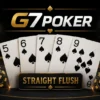
Straight Flush – Five cards in a row that are all the same suit. Like 4-5-6-7-8 all of hearts. Amazing hand!
Four of a Kind (Quads) – All four cards of the same number or letter, like four Kings or four 7s. Incredibly strong!
Full House (Boat) – Three cards of one kind PLUS two cards of another kind in the same hand. Like three Queens and two 5s.
Flush – Five cards that are all the same suit but not in order. Like five random hearts. Very strong!
Straight – Five cards in a row regardless of suit. Like 6-7-8-9-10. Nice hand!
Three of a Kind (Trips/Set) – Three cards of the same number or letter, like three Jacks. Solid hand!
Two Pair – Two sets of matching cards, like two Aces AND two Kings. Pretty decent!
One Pair – Just two cards that match, like two 9s. The most common hand you’ll make.
High Card – You have nothing at all. No matches, no straight, no flush. Your only hope is that your highest card beats everyone else’s highest card.
Hand Categories & Descriptions
Words used to describe what kind of starting cards you have and how good they are.
Pocket Pair – When your two secret cards match each other, like getting two 8s. A great start!
Pocket Aces (AA) – The best two cards you can possibly start with, two Aces! Players get super excited when they see these.
Broadway Cards – Big high cards like Ace, King, Queen, Jack, and Ten. These are called Broadway cards because they’re the big stars of the deck.
Suited Connectors – Two cards that are right next to each other in value AND the same suit, like 7 and 8 of hearts. They work together to make straights and flushes.
Suited – Your two cards are the same suit, like both hearts. This gives you a chance to make a flush later.
Offsuit – Your two cards are different suits. Not bad, just less chance of making a flush.
Dominated Hand – Your cards look okay but they’re actually in big trouble against your opponent’s cards, like having King-Jack against someone with Ace-Jack. They share the Jack, but they have you beat badly.
Premium Hands – The best starting hands in the game, like Aces, Kings, Queens, Jacks, and Ace-King. These are the ones you get really excited about.
Speculative Hands – Cards that aren’t great yet but could become amazing if the right cards come out. Worth playing carefully.
Nuts – Having the best possible hand on the table right now. Nobody can beat you. You have THE NUTS!
Nut Flush Draw – You’re trying to make a flush AND if you make it, it’ll be the best flush possible because you have the Ace.
Second Nuts – The second-best possible hand. Strong, but one specific hand could beat you.
Blockers – Cards in your hand that make it less likely your opponents have certain strong hands, because you’re holding one of the cards they’d need.
Combo Draw – When your hand is chasing TWO different things at once, like both a straight AND a flush. Lots of ways to win!
Overpair – When your pocket pair is bigger than every card showing on the table. Like having two Kings when the table shows 9-6-3.
Top Pair – You matched your card with the biggest card on the table. A good, solid hand.
Middle Pair – You matched your card with the middle card on the table. Decent but watch out for better hands.
Bottom Pair – You matched your card with the smallest card on the table. It is a weak pair so be careful!
Trips – Three cards of the same kind, using one of YOUR secret cards and two from the table.
Set – Three cards of the same kind using BOTH of your secret cards as a pair, plus one matching card on the table. Even better than Trips because it’s more hidden!
Drawing Hands & Outs
When your hand is not finished yet, you are waiting for the right card to complete something big.
Draw – Your hand isn’t complete yet, you need one more card to make something great. You’re drawing for it!
Outs – The number of cards still in the deck that can save you and complete your hand. More outs = better chance of winning!
Open-Ended Straight Draw (OESD) – You have four cards in a row and you need one more card at either end to finish the straight. Like having 5-6-7-8 and needing a 4 or a 9.
Gutshot (Inside Straight Draw) – You have four cards almost in a row but you’re missing a card from the MIDDLE. Like having 5-6-8-9 and needing a 7. Harder to hit than an open-ended draw.
Double Gutshot – Two gutshot draws at the same time, two different missing middle cards that could complete your straight. Double the chances!
Flush Draw – You have four cards of the same suit and just need ONE more to complete a flush. With two cards still to come you hit it roughly 35% of the time. Pretty good odds!
Backdoor Draw – You need BOTH the next two cards to be perfect to complete your hand. Like needing two more hearts. Tricky and rare to pull off.
Runner-Runner – Same thing as a backdoor draw, hitting two perfect cards in a row to make a surprise hand. Feels amazing when it happens!
Overcard Draw – You’re hoping to pair one of your high cards (which is bigger than everything on the table) to make a good hand.
Semi-Bluff – You bet big even though your hand isn’t finished yet. You’re either hoping everyone folds OR you hit your draw and win anyway. Two ways to win!
Dead Money – Chips left in the pot by players who already gave up and folded. Free money just sitting there waiting to be won!
Equity – Your percentage chance of winning the hand right now. Like saying you have a 60% chance to win, that’s your equity.
Pot Odds – Comparing how much you need to call versus how much you could win. If the math works out in your favor, calling is smart!
Implied Odds – Not just thinking about the chips in the pot NOW, but also imagining all the extra chips you might win later if you hit your hand.
Reverse Implied Odds – When hitting your card might actually be dangerous, because even if you make your hand, someone else might have an even better one and take all your chips.
Position & Seat Names
Where you sit at the table matters a LOT. Acting last is like being the last one to answer. You know more before you decide!
Under the Gun (UTG) – The first person who has to make a decision before seeing what anyone else does. It’s tough because you have no information yet, like going first in a guessing game.
UTG+1 – The player sitting right next to Under the Gun. Still one of the early, tricky seats.
Middle Position (MP) – You’re sitting in the middle of the action, not first, not last. A fair spot with some information but not all of it.
Lojack (LJ) – Three seats before the dealer. Still in the middle, but you’re starting to get a little more information.
Hijack (HJ) – Two seats before the dealer. You’re getting closer to the good seats, slightly more freedom to play more hands.
Cutoff (CO) – Just one seat before the best seat in the game. You can play more hands here because most people have already shown what they’re doing.
Button (BTN) – The best seat at the table! You act last after the cards are dealt, which means you get to see EVERYONE else make their decision before you. So much easier to decide!
Small Blind (SB) – You already put in chips, but you have to bet first every single round after the cards come out. Not ideal.
Big Blind (BB) – You put in more chips to start, but at least you get to act last before the first cards are dealt. Gets tricky after that though.
In Position (IP) – You get to go AFTER your opponent, so you always know what they did before you decide. A big advantage!
Out of Position (OOP) – You have to go BEFORE your opponent, so you’re making decisions blind to what they’ll do. A tougher spot.
Early Position (EP) – The first few seats that have to act, the most difficult spots because you know the least about other players’ hands.
Late Position (LP) – The last few seats to act, the most powerful spots because you’ve seen what most other players decided to do.
Heads-Up (HU) – Only two players are left in the hand or the whole game. Just you and one opponent, one-on-one!
Multiway Pot – Three or more players are still fighting for the pot. More competition means you need a stronger hand to feel safe.
Betting Rounds (Streets)
A poker hand is played out in stages. Each stage has its own name.
Pre-flop – The very beginning of the hand. You just got your two secret cards and now everyone decides whether to bet, raise, or fold before any shared cards come out.
Flop – Three shared cards are flipped over in the middle of the table at the same time. This is when hands start taking shape!
Turn (Fourth Street) – A fourth shared card is flipped over. Things are getting serious, you now have six cards to work with (your 2 plus 4 on the table).
River (Fifth Street) – The very last card is flipped. This is the final chance to make your best hand before everyone shows their cards.
Street – Just a general word for each betting stage in the game, pre-flop, flop, turn, and river are the four streets.
Running It Twice – When two players are all-in, they can agree to deal the remaining cards twice and split the pot fairly. It helps reduce the heartbreak of really bad luck!
Board Texture & Structure
How to describe what the shared cards on the table look like and what they mean for everyone’s hands.
Board Texture – What the shared cards on the table look like together. Are they dangerous with lots of possible strong hands, or pretty safe and simple?
Dry Board – A table with boring, disconnected cards that don’t help make straights or flushes easily. Like a 2, 7, and King with different suits. Much safer!
Wet Board – A table with cards that are connected or same-suited, meaning LOTS of possible strong hands are out there. Like 7, 8, 9 all of spades. Dangerous!
Paired Board – When two of the cards on the table have the same number or letter. This makes full houses and four-of-a-kinds possible.
Monotone Board – All three first cards are the same suit, like three spades. A flush is already possible right away!
Rainbow Board – All three first cards are different suits. Nobody can have a flush yet, a safer board for most hands.
Two-tone Board – Two of the three cards share a suit. One player might be building toward a flush.
Connected Board – The cards on the table are close in number, like 7, 8, 9. Easy to make straights, so be careful!
High Board – The cards on the table are big, lots of face cards and tens. Good for players who started with big cards.
Low Board – The cards on the table are small, twos, threes, fours. Sneaky for players who have small pocket pairs!
Coordinated Board – The cards on the table work together really well to create many possible big hands. Lots of action on these boards!
Brick (Blank) – A new card comes out on the turn or river and it changes absolutely nothing. It’s like nothing happened, totally useless for everyone.
Strategy Concepts
The big ideas that smart poker players think about when deciding what to do.
Value Bet – Betting when you have a strong hand and hoping your opponent thinks their hand is good enough to call. That way you win even more chips!
Bluff – Betting confidently even though your hand is weak, hoping everyone else gets scared and folds. You’re putting on a show!
Pure Bluff – A complete bluff with basically zero chance of winning if someone calls you. Pure acting with a totally useless hand.
Bluff Catcher – A hand that’s not strong enough to bet for value, but might be just good enough to catch someone who’s bluffing.
Range – All the different cards someone could possibly have based on how they’ve been playing. You’re guessing their ‘menu’ of possible hands.
Range Advantage – When YOUR possible hands are overall much stronger than your opponent’s possible hands. You’re winning the guessing game.
Polarized Range – Betting with either a really amazing hand OR a total bluff, nothing in between. You’re either super strong or completely faking it.
Merged Range – Betting with a wide mix of hands, strong ones, medium ones, and some bluffs all mixed together.
Condensed Range – When your possible hands are all kind of medium, no monsters, no total bluffs. Just a lot of okay hands.
Hand Reading – The skill of figuring out what cards your opponent probably has, based on how they’ve been betting and acting throughout the hand.
Pot Control – On purpose keeping the bets small so the pot doesn’t grow too big when you have an okay hand that might lose if too many chips are at risk.
GTO (Game Theory Optimal) – The mathematically perfect way to play poker so that nobody can ever fully take advantage of you. Computers have worked this out and it is considered the ultimate strategy.
Exploitative Play – Forgetting about perfect strategy and instead targeting the specific mistakes your opponents keep making. If someone always folds, bluff them more!
Protection Bet – Betting with a good hand to stop your opponent from getting a free card that might beat you on the next turn.
Thin Value – Betting for value even when you’re not super sure you have the best hand. Taking a small risk to win a little extra.
Hero Call – Calling a big bet with a weak hand because your gut tells you the other person is bluffing. A brave move!
Level Thinking – Thinking about what your opponent thinks about what you think about what they think… It’s like a mind game inside a mind game!
Metagame – The bigger picture strategy beyond just one hand, how your past actions affect how people play against you in future hands.
Image / Table Image – What the other players think about how you play. If they think you’re super tight and careful, they’ll respect your bets more.
Player Types & Styles
Words to describe the different types of players you’ll meet at a poker table.
Fish – A beginner or weak player who makes lots of mistakes. At a poker table, experienced players love playing against fish.
Shark – An expert player who knows all the tricks and consistently wins chips from weaker players. The hunter of the table.
Whale – A very rich player who bets huge amounts even though they’re not very skilled. Everyone loves having a whale at their table!
Nit – An extremely cautious, tight player who only ever plays the very best hands and folds everything else. Super boring but hard to bluff.
Calling Station – A player who calls almost every bet but almost never folds. Great news: never bluff them. Just bet your good hands and collect their chips!
Maniac – A wild, crazy player who raises and bets constantly no matter what cards they have. Exhausting and unpredictable!
Loose – A player who plays many different hands, not just strong ones. They’re in a lot of pots.
Tight – A player who only plays when they have really good cards. Patient and selective.
Aggressive – A player who loves to bet and raise rather than just call and wait. Always putting pressure on others.
Passive – A player who prefers to call and check rather than bet and raise. More of a follower than a leader at the table.
TAG (Tight-Aggressive) – The most recommended style for winning players. Only play good hands, but when you do play them, be confident and aggressive.
LAG (Loose-Aggressive) – Playing lots of hands AND betting aggressively on most of them. Super risky but very tough to play against if done right.
Reg (Regular) – A player who plays all the time and knows what they’re doing. Watch out for these people!
Rec (Recreational Player) – Someone who plays just for fun, not to win money. Usually plays looser and doesn’t study strategy much.
Mental Game & Psychology
Poker is not just about cards. It is about staying calm, reading people, and keeping your cool.
Tilt – When you get so frustrated or upset from losing that you start making bad decisions. Like a video game going haywire, you are totally out of control!
Bad Beat – When you had amazing cards and were basically guaranteed to win, but somehow lost anyway because of super unlucky cards coming out. Incredibly frustrating!
Cooler – When both players have really powerful hands and one person just has to lose. Nobody made a mistake. It is simply bad luck running into even worse luck.
Variance – The natural up-and-down swings in poker results. Even the best player in the world will lose sometimes. That is variance. Do not panic!
Downswing – A long rough patch where you keep losing even if you’re playing well. Every poker player goes through these at some point. Hang in there!
Upswing – A great run where everything seems to go your way and you keep winning. Enjoy it, but remember it won’t last forever!
Tell – A habit or reaction someone has that accidentally gives away information about their hand. Like nervously tapping the table when bluffing.
Live Tell – A physical tell you can spot in person, like shaky hands, avoiding eye contact, or suddenly sitting up straight with a big hand.
Timing Tell – A tell based on HOW LONG someone takes to act. Instant calls often mean a draw; long pauses before a raise often mean a monster hand.
Table Talk – Chatting at the table, sometimes just for fun, but sometimes to confuse opponents or get them to reveal information about their hand.
Hollywood – Pretending to think really hard or acting uncertain when you actually know exactly what you’re doing. Pure acting to fool your opponents!
Tanking – Taking a really long time to make your decision. Sometimes done genuinely with tough hands, sometimes done to confuse opponents.
Needle – A little jab or comment meant to annoy or frustrate your opponent so they start playing badly. Not very nice, but it happens!
Tournament Terminology
Special words used in poker tournaments where you play until one person wins all the chips.
MTT (Multi-Table Tournament) – A big tournament with many tables and many players, all competing until one person is left with all the chips and wins the big prize.
Sit & Go (SNG) – A small, quick tournament that starts as soon as enough players sign up, no waiting for a set time!
Deep Stack – A tournament where everyone starts with a LOT of chips compared to the blinds. This means more time to play clever poker before things get crazy.
Turbo – A fast tournament where the blinds go up very quickly, forcing everyone to make bigger decisions sooner. Fast and furious!
Hyper-Turbo – Even faster than Turbo. The blinds shoot up so quickly that it becomes almost entirely about going all-in or folding every hand.
Blind Levels – The stages in a tournament where the forced bets get bigger and bigger over time, making the game more intense as it goes on.
Rebuy – In some tournaments, if you run out of chips early, you can pay again to get a fresh stack and keep playing.
Add-on – A one-time chance during a tournament break to buy some extra chips and boost your stack.
Registration Period – The window of time where new players can still join the tournament after it has already started.
Bubble – The scary moment near the end of a tournament just BEFORE players start winning prize money. Nobody wants to be the last one out before the cash!
Bubble Boy – The unlucky player who gets knocked out just one spot before the prize money starts. The worst timing possible!
In the Money (ITM) – You made it past the bubble and are guaranteed to win some prize money no matter what happens next. Breathe easy!
Min-cash – Finishing in the lowest prize position. You won something but just barely enough to cover your entry fee.
Final Table – The last 9 players left in the whole tournament! This is where the biggest prizes are. Very exciting!
ICM (Independent Chip Model) – A math formula that figures out how much real money your chips are worth during a tournament, especially when prize jumps are close.
ICM Pressure – The feeling near big prize jumps that makes you want to play more carefully, because busting out now would cost you real prize money.
Chip-EV – Just looking at chips as chips and ignoring prize money math. Sometimes the best chip decision and the best money decision are different things!
Deal / Chop – When the last few players agree to split up the remaining prize money instead of playing it all out. Everyone gets something guaranteed.
Ante-off – When a short-stacked player loses all their chips just from the forced ante payments, without even seeing any cards to play.
Push-Fold – When your chip stack is so small that your only two choices are to go all-in or fold. No more fancy playing allowed!
Clock – When you ask the tournament director to give a player a countdown timer to make their decision. Usually 30 seconds or a minute to decide.
Level – One stage of a tournament with specific blind amounts. After a set time, the level goes up and blinds get bigger.
Poker Slang & Colorful Phrases
This is the poker slang and poker phrases section. These are the fun casual expressions and colorful nicknames real players use every single day at the table.
Bullets – A cool nickname for two Aces. It is the best starting hand in the game, like having two bullets loaded and ready!
Cowboys – A fun nickname for two Kings. Ride ’em cowboy!
Ladies – A nickname for two Queens. Fancy and powerful!
Fishhooks – A nickname for two Jacks. They look like fishhooks if you tilt the number sideways. Fun to say but tricky to play!
Ducks – A cute nickname for two 2s because the number 2 kind of looks like a little duck. Quack quack!
Big Slick – The nickname for Ace-King. It is the best non-pair starting hand in the game and it sounds tough because it is!
Sailboats – A nickname for two 4s because the number 4 looks like a little sailboat. Adorable!
Presto – An old funny nickname for two 5s. Players yell ‘Presto!’ when it wins against the odds.
Beer Hand – The nickname for 7-2 offsuit, the absolute worst starting hand in Texas Hold’em. You might as well grab a drink!
Anna Kournikova – A funny nickname for Ace-King, because just like the tennis player, it looks incredible but sometimes doesn’t win. Named after a famous tennis star!
Cracked – When your amazing hand gets beaten by a much weaker one. Like when someone’s two Aces lose to a lucky player with smaller cards.
Dominated – When your hand looks okay but is in serious trouble against your opponent’s similar-but-better hand. Like bringing a butter knife to a sword fight.
Monster – A massively strong hand like four of a kind or a full house. You love having a monster!
Air – Having absolutely nothing. No pair, no draw, zero value. Just a handful of useless cards.
Scare Card – A new card that comes out and suddenly makes everyone nervous because it could give someone a very strong hand.
Running Bad – Going through a rough patch where nothing seems to go your way, no matter how well you play.
Running Good – Everything is going perfectly, your cards keep hitting and you keep winning. Enjoy every second!
Nosebleed Stakes – Poker games with incredibly high amounts of money. So high it makes your nose bleed just thinking about it!
Grind – Playing poker for a long time, session after session, working hard and staying disciplined to slowly build up winnings.
Makeup – Money that a backed player owes to their financial supporter after losing. Like a debt you need to pay back before you can earn.
Staking – When someone else pays for your tournament entry in exchange for a share of whatever you win. Like having a sponsor!
Swapping – Two players agree to each own a small percentage of each other’s results, So if one of them wins big, both players benefit a little.
Poker Face – Keeping a completely blank, emotionless face so nobody can tell if you have great cards or terrible ones. The most famous skill in poker!
Slowroll – Waiting a very long time before showing your winning hand at the end. It’s considered very rude, don’t do it!
String Bet – An illegal move where someone adds chips to their bet in multiple separate moves. You have to put all your chips in at once or say the amount first.
Angle Shoot – A sneaky, unsportsmanlike trick to get an unfair advantage, It is technically not against the rules but it is still considered very bad behavior.
Game Variants & Formats
Poker is not just one game. There are many different versions and ways to play!
Texas Hold’em – The most popular poker game in the world! You get 2 secret cards and share 5 cards with everyone. The game you see on TV!
Pot-Limit Omaha (PLO) – Similar to Texas Hold’em but you get 4 secret cards instead of 2, You must use exactly 2 of your secret cards and exactly 3 from the table. More cards means bigger and crazier hands!
Seven-Card Stud – An older version of poker where there are no shared cards. Each player gets 7 cards, some face-up for everyone to see, some face-down just for you.
Razz – A backwards poker game where the LOWEST hand wins instead of the best! Aces count as low here.
2-7 Triple Draw – Another backwards game where the worst possible hand wins, and you get to swap your cards up to three times to try to get the worst hand possible.
Mixed Games (HORSE) – A fun rotation of five different poker games in one session: Hold’em, Omaha, Razz, Stud, and Eight-or-Better. Tests if you can play all styles!
Short Deck (6+) – Regular Texas Hold’em but all cards below a 6 are removed from the deck. This makes big hands happen much more often and changes some hand rankings too!
Cash Game (Ring Game) – A regular poker game where chips equal real money and you can leave or buy more chips whenever you want. There is no tournament pressure, just relaxed ongoing play.
No-Limit (NL) – You can bet as much as you want at any time, including every single chip you have. The most exciting and most popular betting style.
Pot-Limit (PL) – You can only bet up to the amount currently in the pot. Bigger than fixed-limit but less wild than no-limit.
Fixed-Limit (FL) – All bets are set to specific sizes, you can only bet exactly this amount, no more, no less. More structured and less scary than no-limit.
Heads-Up (HU) Poker – Playing one-on-one against a single opponent. Every hand matters enormously when it’s just two of you!
6-Max – A poker table with only 6 seats instead of the usual 9. Fewer players means more action and more hands per hour.
Full Ring – A standard table with 8 or 9 players. It is the classic setup you would see at a casino.
Home Game – A friendly poker game at someone’s house with friends. Usually more relaxed and fun than a casino!