Knowing how to play poker and knowing the official rules of poker are two different things.
One gets you through your first hand. The other keeps you from making costly mistakes at a real table and lets you call out violations when others make them. Whether you are sitting down at a casino for the first time, playing in a serious home game, or moving to online poker, understanding the formal rules is what separates a casual player from a confident one.
This guide covers the official poker game rules in full: betting conduct, the all-in rule, side pots, showdown procedure, misdeals, table rules, and the edge cases that trip up even experienced players. If you are completely new to the game, start with our guide on learn how to play poker first, then come back here for the full ruleset.
Poker Card Rules: The Deck, Burns, and Exposed Cards
Poker is played with a standard 52-card deck with no jokers. One deck is used per table in most live games. In high-volume card rooms, two decks are sometimes rotated so the next hand can be shuffled while the current one is being dealt.
What Are Burn Cards in Poker?
Before dealing the flop, turn, and river, the dealer burns one card by placing it face-down and out of play. Burn cards exist to protect against any player who may have accidentally seen the top card of the deck. The burned card is never revealed and plays no part in the hand.
What Happens When a Card Is Exposed During the Deal?
If a card is accidentally turned face-up during the initial deal, the procedure depends on when it happens:
- First or second card exposed: a misdeal is typically called (see Misdeal Rules below).
- Card exposed after the initial deal: in most card rooms, the player must keep the exposed card. In some rooms it is replaced at the player’s request before action begins.
- Community card exposed prematurely: the card is set aside, the remaining community cards are dealt in order, and the premature card is used last in sequence.
Marked or Damaged Cards
If a card is found to be marked, damaged, or distinguishable from the others mid-hand, the hand is completed as-is and the card is replaced in the deck afterward. If the damage is severe enough to compromise the game, a new deck may be called for between hands.
Official Poker Betting Rules
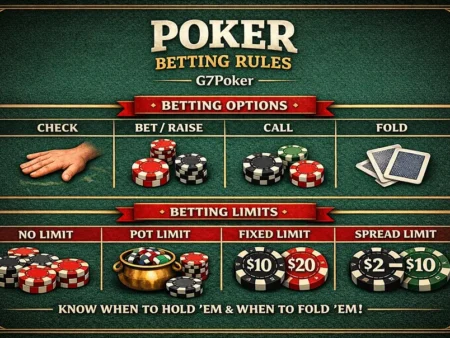
Betting rules govern what actions are legal, in what order, and what happens when a player breaks protocol. These rules exist to protect all players from ambiguity and advantage plays. For a full guide on bet sizing and betting structures, see our dedicated how to bet in poker guide.
Verbal Declarations Are Binding
In a live game, saying your action out loud makes it binding. If you say “raise” you must raise and cannot change to a call. This applies to all verbal declarations: fold, call, raise, check, all-in. The rule protects the table from players who use false declarations to gauge reactions before committing.
What Is a String Bet in Poker?
A string bet occurs when a player puts in chips to call, pauses to observe the reaction, and then adds more chips to raise. This is illegal because it gives the bettor an unfair advantage by watching how opponents react before completing the action.
The correct procedure is to either announce your raise amount before touching your chips, or put all your chips in with one continuous motion. If a string bet is identified, only the first amount (the call) counts and the raise portion is returned.
Minimum Raise Rule
A raise must be at least the size of the previous raise or bet in that same round. If the big blind is $10 and someone raises to $30 (a raise of $20), the minimum re-raise is another $20, making the total $50. This rule prevents players from making tiny raises purely to delay the hand.
Acting Out of Turn in Poker
Acting before it is your turn is a violation. If you fold, call, or raise out of turn, your action may be penalized:
- A fold out of turn may be held to.
- A call out of turn is binding if the action to you is unchanged when it actually reaches you.
- A raise out of turn is not binding but may restrict your options when action reaches you.
Acting early gives the remaining players information they should not have yet, which is why the rule exists.
Is Check-Raising Allowed in Poker?
A check-raise is when a player checks their option, then raises after another player bets. This is legal and standard in virtually all professional and casino poker. Some informal home games ban it and this should be agreed before play begins.
The Fold Is Final
Once you fold your hand, that decision is permanent. You cannot re-enter the hand, request to see what would have come, or reclaim chips already in the pot.
The All-In Rule in Poker and How Side Pots Work
The all-in rule is one of the most misunderstood areas of poker rules and one of the most important to understand before playing at a real table.
What Does Going All-In Mean?
A player who commits all of their remaining chips to the pot is all-in. They cannot be forced out of the hand for lack of chips. However, they can only win a portion of the pot proportional to the amount they contributed.
How Side Pots Are Created
When a player goes all-in and other players have more chips, a side pot is created for the excess chips. The all-in player is not eligible to win the side pot, only the main pot.
Here is a straightforward example:
| Player | Stack / Action |
|---|---|
| Player A | Goes all-in for $20 |
| Player B | Calls $20, then bets additional $80 into side pot |
| Player C | Calls the full $100 (including side pot) |
| Main Pot | $60 total (Player A’s $20 matched by B and C) |
| Side Pot | $160 total (the additional $80 from B matched by C) |
At showdown, the best hand among all three players wins the main pot. The best hand between Player B and Player C wins the side pot. Player A can only win the main pot regardless of how strong their hand is.
Multiple All-In Players
If multiple players are all-in for different amounts, multiple side pots are created, one for each all-in threshold. The dealer is responsible for managing pot creation and clearly separating the main pot from all side pots.
All-In with the Best Hand
A player who goes all-in and holds the best hand at showdown wins every pot they are eligible for. They do not win side pots they have no stake in, even if they hold the best cards at the table.
Poker Showdown Rules: Who Shows First and How the Winner Is Decided
The showdown is the final stage of the hand, where remaining players reveal their cards and the pot is awarded. Several formal rules govern this process.
Who Has to Show Their Cards First at Showdown?
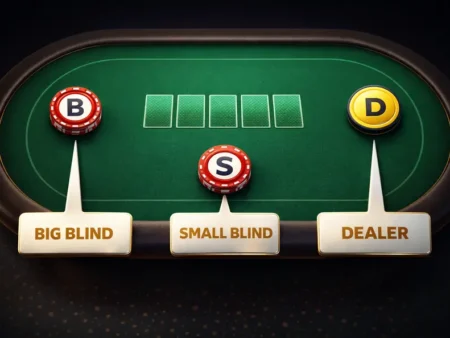
The last player to make an aggressive action (bet or raise) on the final street must show their cards first. If the final street was checked all the way around, the player closest to the left of the dealer button shows first, and it continues clockwise.
What Does Cards Speak Mean in Poker?
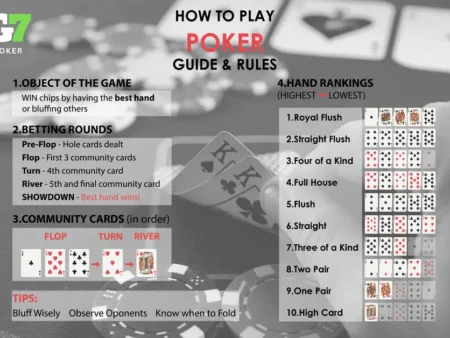
In poker, the cards speak for themselves. The best five-card hand wins regardless of what the player claims their hand is. If a player misreads their hand and announces something weaker, they still win if their actual cards are best. Dealers and other players may point out a better hand, as it is in everyone’s interest for the correct winner to be identified.
Can You Muck Your Hand at Showdown?
If you have been called, you must show your hand. You cannot muck (discard face-down) without showing when there is a caller. If a player’s hand has been shown, any other player at the table, not just the winner, can request to see it in most card rooms. This rule exists to protect against collusion.
If you have not been called, meaning all other players folded, you may muck your hand and take the pot without showing your cards.
How to Split the Pot in Poker
If two or more players hold an identical five-card hand, the pot is split equally between them. Suit has no ranking value in standard poker. A flush in spades does not beat a flush in hearts of the same ranks. If the pot cannot be divided evenly, the odd chip goes to the first player left of the dealer button.
Misdeal Rules in Poker
A misdeal is a deal that must be cancelled and restarted due to an error. When a misdeal is declared, all cards are returned to the deck and reshuffled. Blinds and antes already posted remain in the pot.
The following situations typically result in a misdeal:
- The first or second card dealt is exposed face-up.
- Cards are dealt to the wrong positions or out of sequence.
- A player receives the wrong number of cards.
- A player who was not entitled to a hand (for example, they missed posting their blind) receives cards.
- The deck is found to be incomplete or improperly shuffled before action begins.
A misdeal must be called before action begins. Once any player has looked at their cards and acted, the misdeal window typically closes and play continues as-is.
Poker Table Rules and Conduct
Table conduct rules govern behavior during live play. Violating these rules can result in penalties ranging from a warning to forced sit-outs or disqualification in tournament settings.
One Player to a Hand Rule
Discussing your hand with another player, receiving advice mid-hand, or acting on a signal from someone not involved in the hand is strictly prohibited. This applies even to spectators. Players found violating this rule may have their hand killed.
Chip Visibility Rule
All chips must remain on the table and be visible to all players at all times. Concealing the size of your stack by hiding chips behind larger ones or keeping them in your pocket is against the rules.
What Is Splashing the Pot?
Splashing the pot means throwing chips directly into the center of the pot, making it impossible to verify the bet amount. The correct procedure is to place your chips clearly in front of you, where the dealer can confirm the amount before sweeping them in.
What Is Soft Play in Poker?
Intentionally playing easier against a friend, partner, or associate is prohibited. Soft play, such as refusing to bet strong hands against a specific player or checking down hands you would normally bet, is a form of collusion and is grounds for removal in a card room.
English Only Rule at the Table
Most professional and casino card rooms require English to be spoken at the table during active hands. This rule prevents players from discussing the hand in another language to gain an unfair advantage.
Electronic Devices at the Poker Table
Phone use during active hands is generally prohibited in card rooms. Receiving real-time assistance on hand decisions via any device is against the rules. Many rooms allow phones between hands for general use.
Tournament Poker Rules
Most of the rules above apply in both cash games and tournaments. The following rules are specific to tournament play.
How the Clock Works in Poker Tournaments
Any player at the table may call the clock on a player who is taking an unreasonable amount of time to act. Once the clock is called, the player typically has 60 seconds to make a decision. If they fail to act within the time limit, their hand is folded. In major tournaments, a floor person manages this process.
Blind Levels and Antes in Tournaments
Tournament blinds increase at fixed intervals called levels. Players cannot opt out of posting blinds as the levels rise. Antes, which are forced bets from every player at the table, are standard in later stages of most tournaments to increase the pot size and encourage action.
What Is Hand-for-Hand Play?
When a tournament approaches the bubble (the last position before players enter the money), the game shifts to hand-for-hand play. Every table plays exactly one hand at a time, simultaneously, so no single table can rush through hands to outlast another. This continues until the bubble player is eliminated.
What Is Chip Dumping?
Chip dumping means deliberately losing chips to another player, such as going all-in with a weak hand against a specific opponent. It is a form of collusion and is grounds for immediate disqualification from the tournament.
Late Registration and Re-entry Rules
Most tournaments allow late registration up to a defined point, often the end of the first or second level. Players who bust before late registration closes can re-enter in some formats. Once late registration closes, busted players are eliminated.
Bagging Chips at the End of the Day
In multi-day tournaments, play ends at a set time and surviving players place their chips into a bag with their name and seat number attached. The chips are secured overnight and returned to the same seat the following day.
Cash Game Poker Rules
Cash games, also called ring games or live action games, have their own formal rules that differ from tournament play.
What Is the Table Stakes Rule?
The table stakes rule means you can only play with the chips in front of you at the start of a hand. You cannot reach into your wallet or pocket mid-hand to add more chips. If you run out of chips during a hand, you are all-in for the amount already committed and a side pot is created for any further betting between other players.
Buy-In Rules for Cash Games
Most cash games have a minimum and maximum buy-in. The minimum ensures every player has enough chips to play meaningfully. The maximum prevents one player from having a stack so large it distorts the game. Buy-in rules should be confirmed before sitting down.
What Is a Short Buy in Poker?
A short buy is when a player tops up their stack with an amount below the table minimum. Most card rooms allow one short buy per session, typically when a player’s stack falls below the minimum. The short buy must be declared and approved before the next hand begins.
What Is Ratholing in Poker?
Ratholing means removing chips from the table mid-session by pocketing a portion of your stack to protect winnings while continuing to play. This is against the rules in virtually all card rooms. All chips won must stay on the table until the player leaves the game entirely.
What Is Going South in Poker?
Going south is quietly moving chips from the table to your pocket after a big winning hand while remaining at the table. Like ratholing, it is prohibited because it allows players to reduce risk after winning without leaving, which is unfair to opponents who contributed to that stack.
Basic Poker Rules Quick Reference for Beginners
The questions below come up constantly at real tables. Here are the official answers:
| Common Question | Official Rule |
|---|---|
| Can I look at my cards again? | Yes, at any point during your turn. Do it discreetly. |
| Is check-raising allowed? | Yes, in virtually all professional games. Clarify in home games before you start. |
| Do I have to show my hand at showdown? | Only if you have been called. If everyone folds, you win without showing. |
| What if I accidentally expose my card? | Before deal is complete: misdeal may be called. Mid-hand: play continues, possible penalty. |
| Can I straddle? | Only if the card room or home game explicitly allows it. |
| What if two players have the same hand? | Pot is split equally. Suits never break ties in standard poker. |
| Can I talk about my hand while I am in it? | No. Revealing information about your holding is against the rules. |
| What happens if I put in the wrong chip amount? | Before action: correctable. After action begins: may be held to the higher amount. |
Poker Rules FAQ
What Is a String Bet in Poker?
A string bet is when a player puts in chips to call, pauses, and then adds more to raise. It is illegal because the pause allows the bettor to observe opponent reactions before committing to the raise. Always announce your full raise amount before touching your chips, or put them all in with one continuous motion.
What Happens If You Go All-In and Lose?
In a cash game, you lose the chips you committed and can rebuy to continue playing. In a tournament, losing an all-in means you are eliminated unless re-entry is available and registration is still open.
What Is a Misdeal in Poker?
A misdeal is a deal cancelled due to an error, typically an exposed card, cards dealt out of order, or a player receiving the wrong number of cards. All cards are returned, the deck is reshuffled, and the hand is redealt. Blinds already posted stay in the pot.
Do You Have to Show Your Cards at Showdown?
Only if you have been called. If you bet or raise and every opponent folds, you win the pot without showing. If you are called, you must show. The last aggressor shows first.
What Is the Table Stakes Rule in Poker?
The table stakes rule means you can only bet the chips you have in front of you at the start of a hand. You cannot add chips mid-hand. If you run out, you go all-in and a side pot is created for the remaining players.
What Is Ratholing in Poker?
Ratholing is removing chips from the table mid-session while continuing to play. It is against the rules in all standard card rooms. Any chips you win must stay on the table until you leave the game.
Can You Win a Poker Hand Without the Best Cards?
Yes. If every other player folds before the showdown, you win the pot regardless of what cards you hold and you never have to show them.
What Does Cards Speak Mean in Poker?
Cards speak means the best hand wins based on what the cards actually are, not what the player announces. If a player misreads their hand and declares something weaker, they still win if their cards beat everyone else at showdown.